
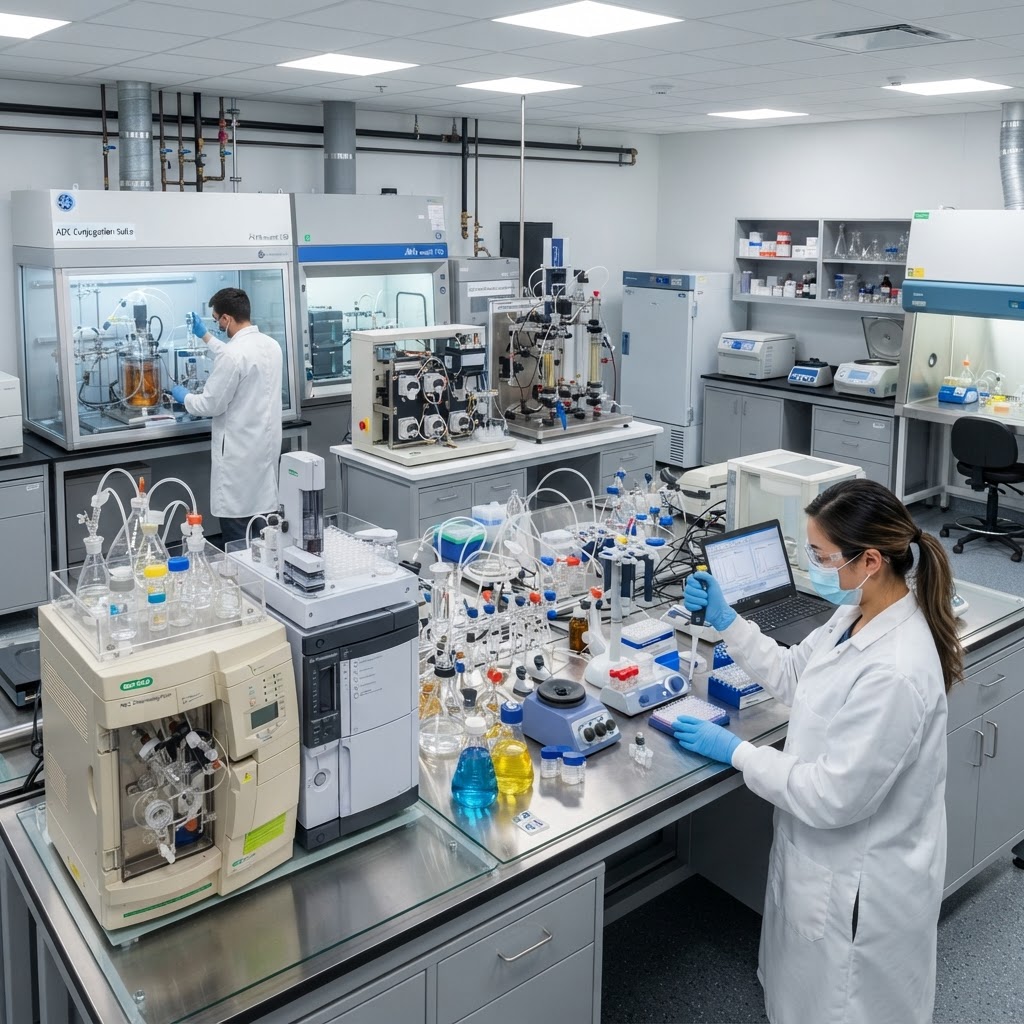
Personalized medicine aims to match the right treatment to the right patient based on molecular and clinical characteristics. Targeted therapies, particularly in oncology, have shown dramatic benefit in biomarker-defined populations, but only if patients are accurately identified. Companion diagnostics (CDx), tests that provide information essential for the safe and effective use of a corresponding therapeutic product, link the drug and the test. Developing drug and diagnostic in parallel is complex because it involves different regulatory frameworks, timelines and disciplines. This white paper explains how to coordinate biomarker strategy, assay validation and regulatory submissions for successful co-development.
The Role of Companion Diagnostics
A companion diagnostic identifies patients who are most likely to benefit from a therapy, are at increased risk of serious adverse reactions, or can be monitored for response. Examples include tests for HER2 amplification in breast cancer, EGFR mutations in lung cancer and BRAF mutations in melanoma. The drug label specifies the required test, so approvals are interlinked. Complementary diagnostics, which inform benefit-risk without being required for use, provide additional context.
Why Co-Development Matters
Without a validated test available at launch, patients cannot be selected appropriately and uptake suffers. Misaligned timelines can delay approval or commercialization. A planned co-development approach reduces risk and speeds access to targeted treatment.
Biomarker Strategy
Hypothesis and Selection
Biomarker hypotheses arise from biology, genetics and early clinical observations. Selection considers biological rationale, prevalence, measurability, sample availability and relationship to clinical outcome. Early-phase studies explore biomarker-response relationships, with exploratory analyses guiding enrichment strategies.
Trial Design Implications
Designs may be enrichment (enrolling only biomarker-positive patients), stratified or all-comers with biomarker analysis. Basket and umbrella trials test therapies across tumor types or multiple biomarkers. The trial assay used to select patients should be analytically validated and representative of the final commercial test, or a bridging study will be needed.
- •Define cutoffs and scoring algorithms early where possible
- •Collect and bank samples for retrospective testing
- •Plan for biomarker-negative patients to understand specificity
Analytical and Clinical Validation
Analytical Validation
The assay must demonstrate accuracy, precision (repeatability and reproducibility across sites, operators and lots), analytical sensitivity and specificity, limit of detection, linearity where relevant and robustness. For genomic assays, performance across variant types, sample types and input amounts is characterized. Specimen stability and pre-analytical variables such as fixation time for tissue are evaluated.
Clinical Validation
Clinical validation shows that the test result correlates with the clinical outcome. This typically uses data from the pivotal drug trial, with samples tested using the final assay. If the trial used a different assay, a bridging study demonstrates concordance and clinical utility, with attention to potential misclassification.
Reference Methods and Standards
Reference materials and well-characterized samples support harmonization across laboratories. For tests offered as laboratory-developed tests initially, transitioning to a regulated in vitro diagnostic requires planning.
Co-Development Operating Model
Governance and Alignment
Joint governance between pharmaceutical sponsor and diagnostic partner aligns timelines, responsibilities and decision points. A co-development agreement specifies roles, data sharing, intellectual property, costs and regulatory responsibilities. Early involvement of diagnostic teams in clinical planning avoids late surprises.
Timeline Integration
Diagnostic development milestones, such as assay locking, analytical validation and clinical bridging, are mapped to drug trial milestones. Locking the assay before pivotal trial start reduces risk of changes affecting interpretability.
Manufacturing and Access
The diagnostic must be manufactured, distributed and supported in laboratories at launch. Laboratory readiness, reimbursement, physician education and turnaround time influence adoption. Test availability across geographies should match the drug's launch plan.
Regulatory Submissions
Coordinated Filings
In the United States, companion diagnostics are typically regulated as high-risk devices requiring premarket approval, with the Investigational Device Exemption process applying to trials when needed. Drug and diagnostic submissions are coordinated so that approvals occur at the same time, with the drug label referencing the approved test. In the EU, the In Vitro Diagnostic Regulation (IVDR) requires notified body involvement and consultation with medicines authorities for companion diagnostics.
Early Engagement
Pre-submission meetings with regulators clarify expectations for analytical and clinical validation, bridging and labeling. Aligning global strategies reduces duplication.
Challenges and Future Directions
Challenges include rapidly evolving multi-gene panels, tumor heterogeneity, liquid biopsy standardization, reimbursement for testing and global regulatory differences. Next-generation sequencing-based CDx and tumor-agnostic indications are increasing complexity and opportunity. Artificial intelligence-based digital pathology tools are emerging as diagnostics. Class-wide claims and broad panels may simplify pathways.
Conclusion
Successful personalized medicine depends on tightly aligned drug and diagnostic development. By defining biomarker strategy early, validating assays rigorously, integrating governance and coordinating regulatory filings, sponsors can bring targeted therapies and their tests to patients together.
About This White Paper
This white paper is published by Biotechnology Media Insights Editorial and curated by Biotechnology Media Insights, a trusted source for pharmaceutical and biotechnology research, technical guides and industry analysis.