
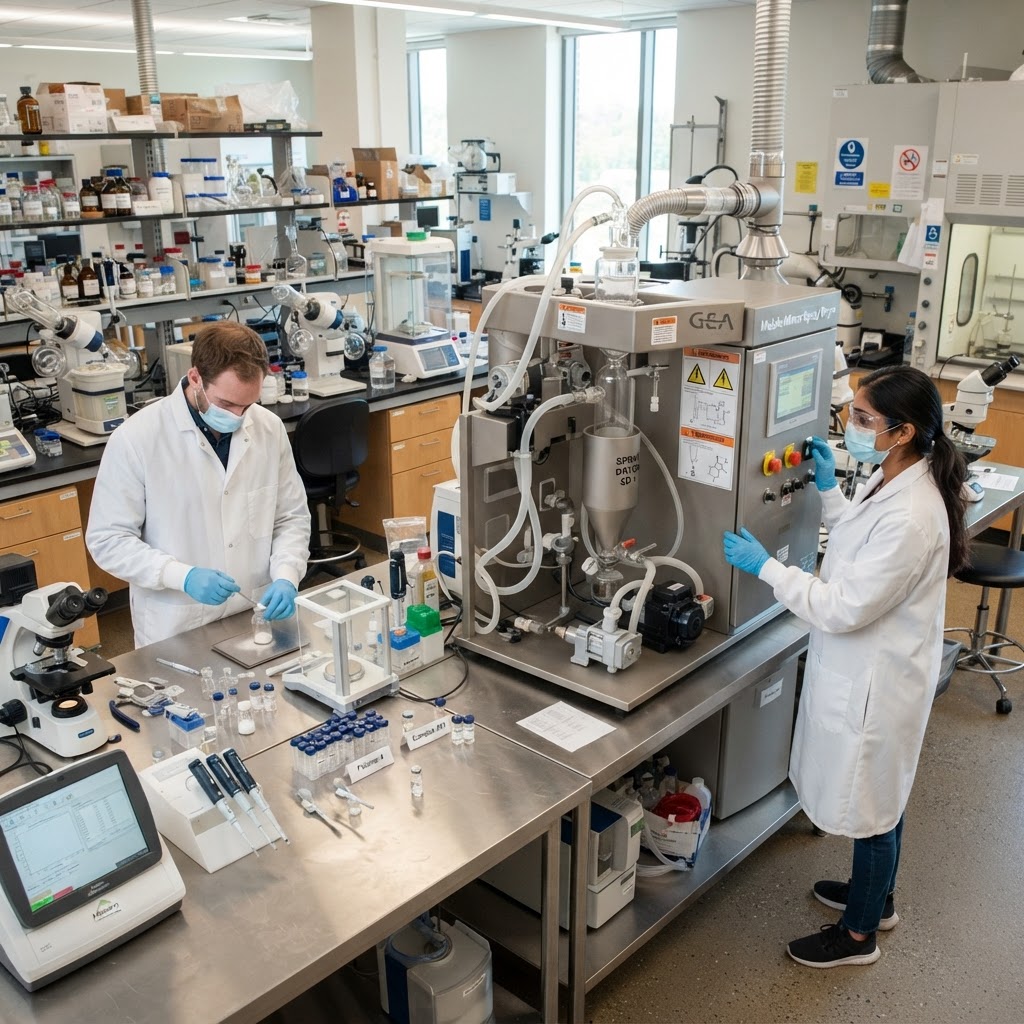
Analytical data underpins every decision in pharmaceutical development, from formulation choices to batch release and stability claims. As sponsors increasingly rely on contract development and manufacturing organizations (CDMOs) and specialized laboratories, analytical methods are frequently developed in one location, validated in another and used routinely in a third. Each transition creates risk of inconsistent results, delays and regulatory observations. This white paper outlines best practices for managing analytical method lifecycle, validation under ICH Q2 and structured transfer between laboratories.
Why Analytical Outsourcing Needs Careful Management
Outsourcing provides access to expertise, instrumentation and capacity, but it also introduces interfaces. Differences in equipment, reagents, analyst technique and local practices can cause methods that worked in one laboratory to behave differently in another. Poor communication and unclear responsibilities can compound the problem. A systematic approach to method development, validation and transfer reduces these risks.
Analytical Method Lifecycle
Analytical Target Profile
The lifecycle starts by defining an analytical target profile (ATP), describing what the method must measure and the performance required, such as accuracy and precision at relevant ranges. The ATP links the method to its intended use and to product quality attributes, guiding development and later change decisions. ICH Q14 and the revised ICH Q2(R2) formalize this lifecycle perspective.
Method Development
Development explores critical method parameters, such as column chemistry, mobile phase, temperature, sample preparation and detection settings. Risk assessment and design of experiments identify factors influencing performance and define a method operable design region within which small variations do not compromise results. Robustness is built in rather than tested at the end.
Continued Performance Verification
After validation, ongoing monitoring of system suitability, control charts and investigation of out-of-trend results confirm that the method remains fit for purpose. Changes are managed through change control with an assessment of impact.
Validation Fundamentals
Validation Characteristics
Under ICH Q2, validation of quantitative methods demonstrates:
- •Specificity: ability to measure the analyte in the presence of impurities, degradants and matrix
- •Accuracy: closeness of results to the true or accepted value
- •Precision: repeatability, intermediate precision and reproducibility
- •Linearity and range: proportional response across the working range
- •Detection and quantitation limits, where applicable
- •Robustness: resilience to small deliberate variations
Phase-Appropriate Validation
Early-phase methods may be qualified with limited validation, increasing in rigor as programs approach pivotal studies and commercial filing. Document the rationale for phase-appropriate approaches and ensure methods are fully validated before use for registration batches.
Stability-Indicating Methods
Forced degradation studies under acid, base, oxidative, thermal and photolytic stress demonstrate that the method separates the active ingredient from its degradants. Peak purity assessment with photodiode array or mass spectrometry supports specificity.
Structured Method Transfer
Transfer Approaches
Common approaches include comparative testing, where both laboratories analyze the same samples; co-validation, where the receiving laboratory participates in validation; revalidation or partial revalidation; and transfer waiver when justified, for example when the receiving laboratory is already experienced with a similar method.
Transfer Protocol
A written protocol defines scope, responsibilities, materials, samples, experimental design, acceptance criteria and handling of deviations. Samples should include relevant lots, spiked samples and, where appropriate, stressed samples. Acceptance criteria are predefined, typically based on method performance, such as differences between laboratories within specified limits.
Knowledge Transfer
Written methods rarely capture all practical details. Sharing tacit knowledge through discussion, video demonstrations, analyst training and exchange of chromatograms helps the receiving laboratory reproduce results. Access to the same column lots and reference standards during early transfer reduces variability.
Communication and Governance
Defining Roles
Quality agreements should specify who owns the method, how changes are approved, who investigates out-of-specification results and how data are shared. Regular technical meetings keep sponsors and partners aligned and allow early detection of issues.
Selecting Laboratory Partners
Evaluate partners on regulatory inspection history, data integrity controls, instrument qualification, analyst competence, experience with your modality and capacity. Site audits and review of sample investigations provide insight into culture and responsiveness.
Data Integrity and Compliance
Analytical data from CDMOs must comply with ALCOA+ principles. Audit trail review, secure data storage, and access to raw data for sponsor review are expected. Reference standard management, reagent qualification and instrument calibration are essential to reliable results.
Troubleshooting Common Transfer Issues
Common causes of discrepancy include differences in column batches, mobile phase preparation, sample handling, integration parameters and instrument dwell volume. Systematic investigation, starting with sample preparation and system suitability, usually reveals the root cause. Documenting findings improves future transfers.
Emerging Trends
Analytical procedure lifecycle management, enhanced method understanding, and digital tools for method transfer, including electronic method exchange and standardized data formats, are improving transfer efficiency. Automation reduces human variability.
Conclusion
Outsourced analytical development succeeds when methods are designed for robustness, validated against clear criteria, transferred with structured protocols and supported by transparent communication. Sponsors who invest in these practices reduce delays, protect data quality and build confidence with regulators.
About This White Paper
This white paper is published by Biotechnology Media Insights Editorial and curated by Biotechnology Media Insights, a trusted source for pharmaceutical and biotechnology research, technical guides and industry analysis.