
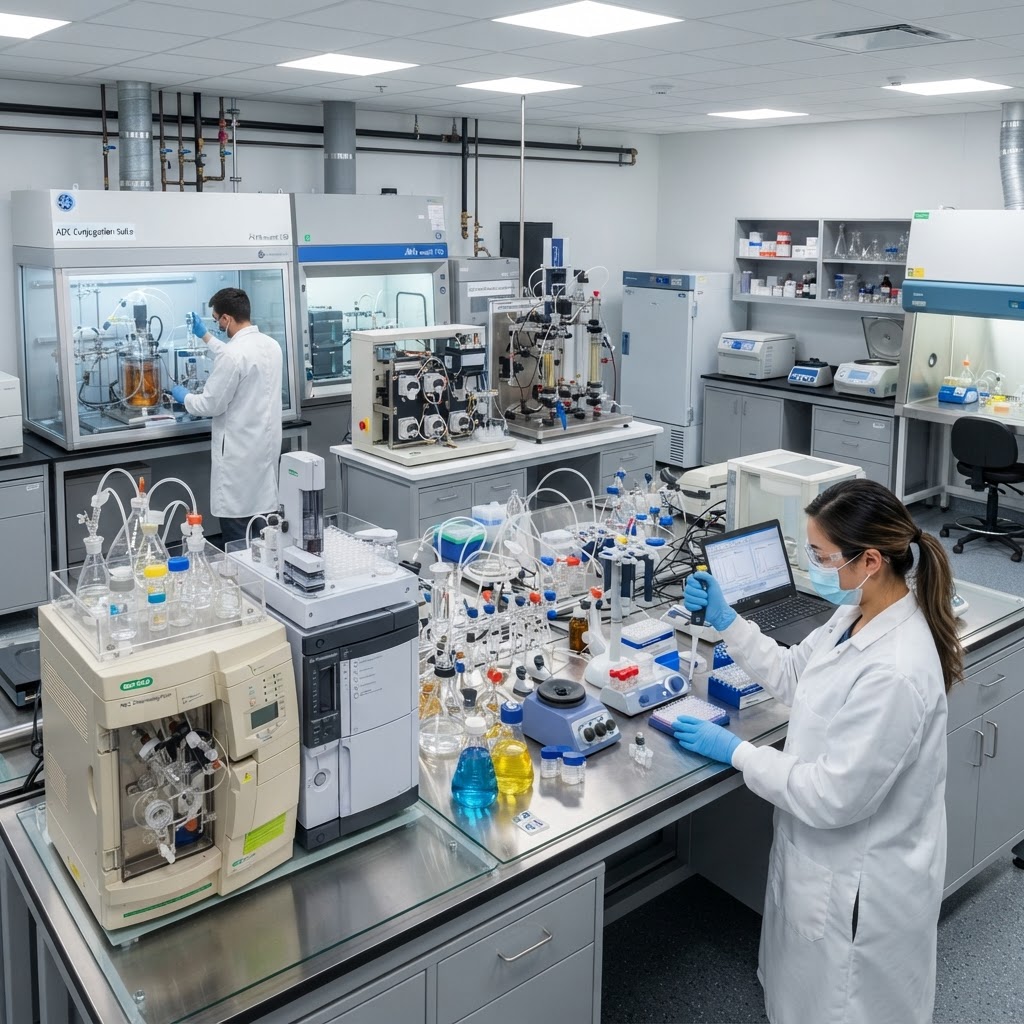
This benchmark study analyzes the evolving bioconjugate and antibody-drug conjugate (ADC) landscape, covering linker-payload chemistry innovations and the criteria used to select a CDMO partner.
Key Findings
Linker-payload chemistry remains the most significant technical challenge. Site-specific conjugation is gaining adoption, dual-payload ADCs are emerging, and integrated end-to-end capability is increasingly important when choosing a manufacturing partner.
Linker-Payload Chemistry Innovations
New cleavable and non-cleavable linker designs offer improved stability, selectivity and therapeutic index, expanding the range of cytotoxic agents that can be incorporated into ADCs.
Site-Specific Conjugation
Site-specific technologies improve homogeneity, pharmacokinetic profiles and off-target toxicity compared with stochastic conjugation, each platform bringing distinct advantages and limitations.
CDMO Selection in the ADC Space
Key criteria include integrated capabilities, experience with high-potency APIs, analytical characterization expertise and regulatory track record.
About This White Paper
This white paper is published by Lonza and curated by Biotechnology Media Insights, a trusted source for pharmaceutical and biotechnology research, technical guides and industry analysis.